
Quetiapine
Quetiapine
- SKU
- 55154-3359
- Mfr
- Cardinal Health 107, LLC
1 tablet, film coated in 1 blister pack, 10 blister pack in 1 bag
$304.39
61 packs × $4.99 each
Minimum order: 61 packs. Each product is sold in quantities worth at least $300.00.
Prescription required. Upload your prescription at checkout or email it to us after ordering. We ship once a pharmacist has checked it. How it works
1 Schizophrenia Quetiapine is indicated for the treatment of schizophrenia. The efficacy of quetiapine in schizophrenia was established in three 6-week trials in adults and one 6-week trial in adolescents (13 to 17 years). 1) ].
- Strength
- Quetiapine Fumarate 200 mg/1
- Unit of measure
- Per 1 tablet
- Dosage form
- Tablet, Film Coated
- Route
- Oral
Pharmacologic class
- Atypical AntipsychoticEstablished class
- Brand name
- Quetiapine
- Generic name
- Quetiapine
- Manufacturer
- Cardinal Health 107, LLC
- Product NDC (SKU)
- 55154-3359
- Active ingredients
- Quetiapine Fumarate 200 mg/1
- Unit of measure
- Per 1 tablet
- Dosage form
- Tablet, Film Coated
- Route
- Oral
- DEA schedule
- Not controlled
- Product type
- HUMAN PRESCRIPTION DRUG
- Marketing category
- ANDA
- Application number
- ANDA201504
- Marketed since
- March 1, 2013
- Label revised
- January 15, 2026
| Package NDC | Description |
|---|---|
| 55154-3359-0 | 10 BLISTER PACK in 1 BAG (55154-3359-0) / 1 TABLET, FILM COATED in 1 BLISTER PACK |
Reading this NDC
55154-3359-0
- 01Labeler code
- Cardinal Health 107, LLC
- 02Product code
- Quetiapine, tablet, film coated
- 03Package code
- 10 blister pack in 1 bag (55154-3359-0) / 1 tablet, film coated in 1 blister pack
The mechanism of action of quetiapine in the listed indications is unclear. However, the efficacy of quetiapine in these indications could be mediated through a combination of dopamine type 2 (D 2 ) and serotonin type 2 (5HT 2 ) antagonism. The active metabolite, N-desalkyl quetiapine (norquetiapine), has similar activity at D 2, but greater activity at 5HT2A receptors, than the parent drug (quetiapine).
Warning: Increased mortality in elderly patients with dementia-related psychosis; and suicidal thoughts and behaviors
Increased Mortality in Elderly Patients with Dementia-Related Psychosis Elderly patients with dementia-related psychosis treated with antipsychotic drugs are at an increased risk of death [ see Warnings and Precautions
]. Quetiapine is not approved for the treatment of patients with dementia-related psychosis [ see Warnings and Precautions
]. Suicidal Thoughts and Behaviors Antidepressants increased the risk of suicidal thoughts and behavior in children, adolescents, and young adults in short-term studies. These studies did not show an increase in the risk of suicidal thoughts and behavior with antidepressant use in patients over age 24; there was a reduction in risk with antidepressant use in patients aged 65 and older [ see Warnings and Precautions
]. In patients of all ages who are started on antidepressant therapy, monitor closely for worsening, and for emergence of suicidal thoughts and behaviors. Advise families and caregivers of the need for close observation and communication with the prescriber [ see Warnings and Precautions
]. Quetiapine is not approved for use in pediatric patients under ten years of age [ see Use in Specific Populations
]. WARNING: INCREASED MORTALITY IN ELDERLY PATIENTS WITH DEMENTIA-RELATED PSYCHOSIS; and SUICIDAL THOUGHTS AND BEHAVIORS See full prescribing information for complete boxed warning. Increased Mortality in Elderly Patients with Dementia-Related Psychosis
- Elderly patients with dementia-related psychosis treated with antipsychotic drugs are at an increased risk of death. Quetiapine tablets is not approved for elderly patients with dementia-related psychosis
Suicidal Thoughts and Behaviors
- Increased risk of suicidal thoughts and behavior in children, adolescents and young adults taking antidepressants
- Monitor for worsening and emergence of suicidal thoughts and behaviors
Quetiapine is an atypical antipsychotic indicated for the treatment of:
- Schizophrenia
- Bipolar I disorder manic episodes
- Bipolar disorder, depressive episodes
Schizophrenia
Quetiapine is indicated for the treatment of schizophrenia. The efficacy of quetiapine in schizophrenia was established in three 6-week trials in adults and one 6-week trial in adolescents (13 to 17 years). The effectiveness of quetiapine for the maintenance treatment of schizophrenia has not been systematically evaluated in controlled clinical trials [ see Clinical Studies
].
Bipolar Disorder
Quetiapine is indicated for the acute treatment of manic episodes associated with bipolar I disorder, both as monotherapy and as an adjunct to lithium or divalproex. Efficacy was established in two 12-week monotherapy trials in adults, in one 3-week adjunctive trial in adults, and in one 3-week monotherapy trial in pediatric patients (10 to 17 years) [ see Clinical Studies
]. Quetiapine is indicated as monotherapy for the acute treatment of depressive episodes associated with bipolar disorder. Efficacy was established in two 8-week monotherapy trials in adult patients with bipolar I and bipolar II disorder [ see Clinical Studies
]. Quetiapine is indicated for the maintenance treatment of bipolar I disorder, as an adjunct to lithium or divalproex. Efficacy was established in two maintenance trials in adults. The effectiveness of quetiapine as monotherapy for the maintenance treatment of bipolar disorder has not been systematically evaluated in controlled clinical trials [ see Clinical Studies
].
Special Considerations in Treating Pediatric Schizophrenia and Bipolar I Disorder
Pediatric schizophrenia and bipolar I disorder are serious mental disorders, however, diagnosis can be challenging. For pediatric schizophrenia, symptom profiles can be variable, and for bipolar I disorder, patients may have variable patterns of periodicity of manic or mixed symptoms. It is recommended that medication therapy for pediatric schizophrenia and bipolar I disorder be initiated only after a thorough diagnostic evaluation has been performed and careful consideration given to the risks associated with medication treatment.
Medication treatment for both pediatric schizophrenia and bipolar I disorder is indicated as part of a total treatment program that often includes psychological, educational and social interventions.
Read before you order

Mental health · 2 min read
Lithium, aripiprazole and quetiapine: why monitoring matters
How lithium and atypical antipsychotics work, the blood tests they need and the warning signs of lithium toxicity.

Mental health · 2 min read
Starting an SSRI: what to expect from sertraline and escitalopram
How SSRI antidepressants work, why they take weeks to help, common early side effects and how to stop them safely.

Mental health · 2 min read
Bupropion and other non-SSRI antidepressants
How bupropion differs from SSRIs, why it is less likely to cause sexual side effects or weight gain, and who should avoid it.
More in Psychotropic
View all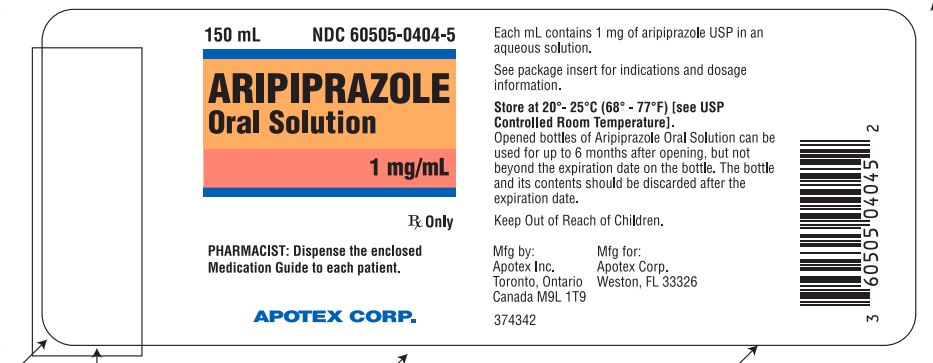
Generic · Solution
Aripiprazole
Aripiprazole 1 mg/mL
- SKU
- 60505-0404
- Mfr
- Apotex Corp.
From $80.99Min. 4 packs

Generic · Tablet
Aripiprazole
Aripiprazole 5 mg/1
- SKU
- 43598-966
- Mfr
- Dr.Reddys Laboratories Inc
From $4.99Min. 61 packs

Generic · Tablet
Aripiprazole
Aripiprazole 20 mg/1
- SKU
- 50090-6403
- Mfr
- A-S Medication Solutions
From $7.99Min. 38 packs

Generic · Tablet
Aripiprazole
Aripiprazole 30 mg/1
- SKU
- 72865-158
- Mfr
- XLCare Pharmaceuticals, Inc.
From $7.99Min. 38 packs