
Saxenda
Liraglutide
- SKU
- 50090-4257
- Mfr
- A-S Medication Solutions
3 ml in 1 syringe, plastic, 5 syringe, plastic in 1 carton
$1,764.99
Price for one pack
Prescription required. Upload your prescription at checkout or email it to us after ordering. We ship once a pharmacist has checked it. How it works
1 )] Limitations of Use ▪ SAXENDA contains liraglutide and should not be coadministered with other liraglutide-containing products or with any other GLP-1 receptor agonist.
- Strength
- Liraglutide 6 mg/mL
- Unit of measure
- Per mL
- Dosage form
- Injection, Solution
- Route
- Subcutaneous
Pharmacologic class
- GLP-1 Receptor AgonistEstablished class
- Glucagon-Like Peptide 1Chemical structure
- Glucagon-like Peptide-1 (GLP-1) AgonistsMechanism
- Brand name
- Saxenda
- Generic name
- Liraglutide
- Manufacturer
- A-S Medication Solutions
- Product NDC (SKU)
- 50090-4257
- Active ingredients
- Liraglutide 6 mg/mL
- Unit of measure
- Per mL
- Dosage form
- Injection, Solution
- Route
- Subcutaneous
- DEA schedule
- Not controlled
- Product type
- HUMAN PRESCRIPTION DRUG
- Marketing category
- NDA
- Application number
- NDA206321
- Marketed since
- December 31, 2014
- Label revised
- January 26, 2024
| Package NDC | Description |
|---|---|
| 50090-4257-0 | 5 SYRINGE, PLASTIC in 1 CARTON (50090-4257-0) / 3 mL in 1 SYRINGE, PLASTIC |
Reading this NDC
50090-4257-0
- 01Labeler code
- A-S Medication Solutions
- 02Product code
- Saxenda, injection, solution
- 03Package code
- 5 syringe, plastic in 1 carton (50090-4257-0) / 3 ml in 1 syringe, plastic
Liraglutide is an acylated human glucagon-like peptide-1 (GLP-1) receptor agonist with 97% amino acid sequence homology to endogenous human GLP-1(7-37). Like endogenous GLP-1, liraglutide binds to and activates the GLP-1 receptor, a cell-surface receptor coupled to adenylyl cyclase activation through the stimulatory G-protein, Gs. Endogenous GLP-1 has a half-life of 1.5-2 minutes due to degradation by the ubiquitous endogenous enzymes, dipeptidyl peptidase 4 (DPP-4) and neutral endopeptidases (NEP).
Unlike native GLP-1, liraglutide is stable against metabolic degradation by both peptidases and has a plasma half-life of 13 hours after subcutaneous administration. The pharmacokinetic profile of liraglutide, which makes it suitable for once-daily administration, is a result of self-association that delays absorption, plasma protein binding, and stability against metabolic degradation by DPP-4 and NEP. GLP-1 is a physiological regulator of appetite and calorie intake, and the GLP-1 receptor is present in several areas of the brain involved in appetite regulation.
In animal studies, peripheral administration of liraglutide resulted in the presence of liraglutide in specific brain regions regulating appetite, including the hypothalamus. Although liraglutide activated neurons in brain regions known to regulate appetite, specific brain regions mediating the effects of liraglutide on appetite were not identified in rats.
Warning: Risk of thyroid c-cell tumors
- Liraglutide causes dose-dependent and treatment-duration-dependent thyroid C-cell tumors at clinically relevant exposures in both genders of rats and mice. It is unknown whether SAXENDA causes thyroid C-cell tumors, including medullary thyroid carcinoma (MTC), in humans, as the human relevance of liraglutide-induced rodent thyroid C-cell tumors has not been determined [see Warnings and Precautions
and Nonclinical Toxicology].
- SAXENDA is contraindicated in patients with a personal or family history of MTC and in patients with Multiple Endocrine Neoplasia syndrome type 2 (MEN 2). Counsel patients regarding the potential risk of MTC with use of SAXENDA and inform them of symptoms of thyroid tumors (e.g., a mass in the neck, dysphagia, dyspnea, persistent hoarseness). Routine monitoring of serum calcitonin or using thyroid ultrasound is of uncertain value for early detection of MTC in patients treated with SAXENDA. WARNING: RISK OF THYROID C-CELL TUMORS See full prescribing information for complete boxed warning.
- Liraglutide causes thyroid C-cell tumors at clinically relevant exposures in both genders of rats and mice. It is unknown whether SAXENDA causes thyroid C-cell tumors, including medullary thyroid carcinoma (MTC), in humans, as the human relevance of liraglutide-induced rodent thyroid C-cell tumors has not been determined.
- SAXENDA is contraindicated in patients with a personal or family history of MTC or in patients with Multiple Endocrine Neoplasia syndrome type 2 (MEN 2). Counsel patients regarding the potential risk of MTC and the symptoms of thyroid tumors.
SAXENDA is indicated as an adjunct to a reduced-calorie diet and increased physical activity for chronic weight management in:
- Adult patients with an initial body mass index (BMI) of:
- 30 kg/m 2 or greater (obese), or
- 27 kg/m 2 or greater (overweight) in the presence of at least one weight-related comorbid condition (e.g., hypertension, type 2 diabetes mellitus, or dyslipidemia)
- Pediatric patients aged 12 years and older with:
- body weight above 60 kg and
- an initial BMI corresponding to 30 kg/m 2 or greater for adults (obese) by international cut-offs (Cole Criteria, Table 2) Limitations of Use
- SAXENDA contains liraglutide and should not be coadministered with other liraglutide-containing products or with any other GLP-1 receptor agonist.
- The safety and effectiveness of SAXENDA in pediatric patients with type 2 diabetes have not been established.
- The safety and effectiveness of SAXENDA in combination with other products intended for weight loss, including prescription drugs, over-the-counter drugs, and herbal preparations, have not been established. SAXENDA is a glucagon like peptide 1 (GLP-1) receptor agonist indicated as an adjunct to a reduced-calorie diet and increased physical activity for chronic weight management in: Adult patients with an initial body mass index (BMI) of
- 30 kg/m 2 or greater (obese), or
- 27 kg/m 2 or greater (overweight) in the presence of at least one weight-related comorbid condition (e.g. hypertension, type 2 diabetes mellitus, or dyslipidemia). Pediatric patients aged 12 years and older with:
- body weight above 60 kg and
- an initial BMI corresponding to 30 kg/m 2 for adults (obese) by international cut-offs. Limitations of Use:
- SAXENDA contains liraglutide and should not be coadministered with other liraglutide-containing products or with any other GLP-1 receptor agonist.
- The safety and effectiveness of SAXENDA in pediatric patients with type 2 diabetes have not been established.
- The safety and efficacy of SAXENDA in combination with other products intended for weight loss have not been established
.
Read before you order

Weight management · 3 min read
How GLP-1 weight-loss medicines work
Semaglutide, tirzepatide and liraglutide explained: how they reduce appetite, how quickly they work and what to expect in the first months.

Weight management · 2 min read
Managing nausea and other GLP-1 side effects
Practical ways to cope with nausea, constipation and reflux on semaglutide or tirzepatide, and the warning signs that need a doctor.

Weight management · 2 min read
Orlistat, phentermine and Contrave: the older weight-loss medicines
How orlistat, phentermine and naltrexone-bupropion work, who they suit and the side effects to know about before starting.
More in Weight Management
View allBrand · Capsule
Alli
Orlistat 60 mg/1
- SKU
- 0135-0461
- Mfr
- Haleon US Holdings LLC
From $47.99Min. 7 packs
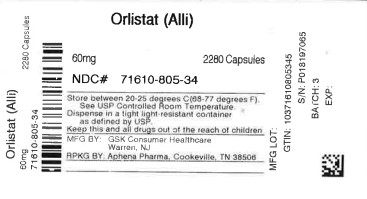
Brand · Capsule
Alli
Orlistat 60 mg/1
- SKU
- 71610-805
- Mfr
- Aphena Pharma Solutions - Tennessee, LLC
From $1,329.43

Brand · Tablet
Contrave Extended-Release
Naltrexone Hydrochloride 8 mg/1, Bupropion Hydrochloride 90 mg/1
- SKU
- 51267-890
- Mfr
- Nalpropion Pharmaceuticals LLC
From $199.00Min. 2 packs
Brand · Injection
Mounjaro
Tirzepatide 4.17 mg/mL
- SKU
- 0002-4052
- Mfr
- Eli Lilly and Company
From $1,454.99